By Lizmary Ortiz
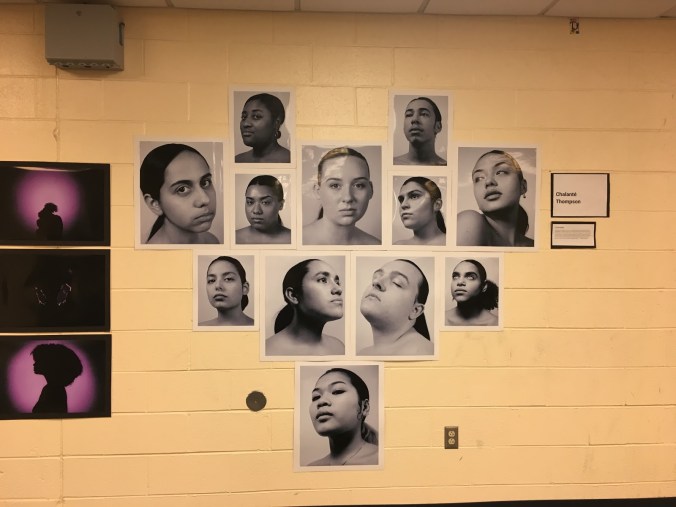
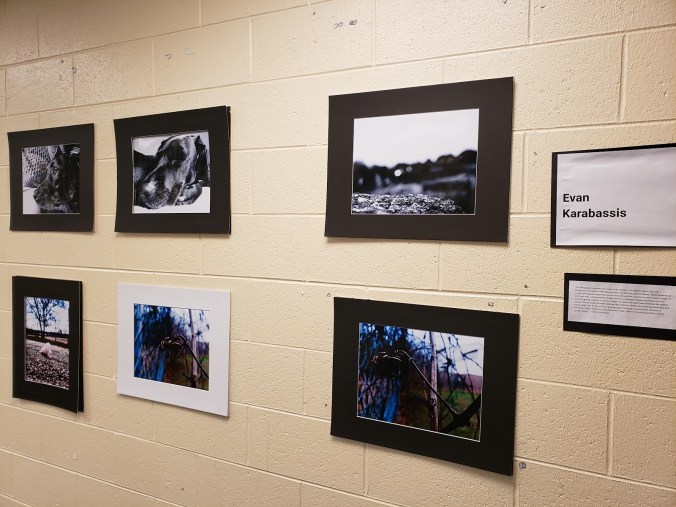
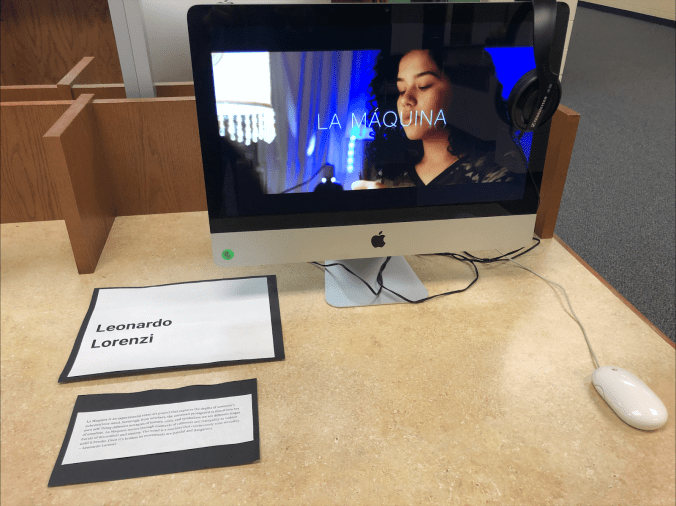
From February 11th to February 22, 2019, The Arts Academy at Benjamin Rush presented an art exhibition featuring the work of the art students in Media Arts 3. The students in this class produced photography, video, and other mixed media work. The most recent work created by the advanced media students was on display at the Rush Arts library, and was open for visitation to all students and faculty members. The artists recognized in this exhibit include: Erika Rivera, Brianna Reagan, Ivy Smith, Evangelos Karabassis, Jack Leach, Alejandro Sarris, Chalante Thompson, Leonardo Lorenzi, and Giavonna Espinoza.
These students, all of which are seniors in the Class of 2019, have taken Media classes for three consecutive years. Their hard work and dedication is apparent in their works, which are inspired and elaborate. We asked a number of these artists several questions regarding their previous and future projects, as well as how they bring their inspired ideas to life. The following series will showcase a Q&A with the artists featured in the show.
The following is Part One of the two-part Q&A with the Media 3 students at The Arts Academy at Benjamin Rush.
**The ‘Exposures’ exhibition has been extended and will be on view throughout the month of March and will be included in the Spring Visual Arts Exhibition on March 26.
What kinds of things inspire you to create art?
Alejandro Sarris: Architecture is one of the main things that inspire me.
Brianna Reagan: I don’t really think any one thing inspires me. Personal events and looking to the past helps make me think about creating a lot.
Chalanté Thompson: Dark color pallets and a grim mood.
Evangelos Karabassis: Nature.
Giavonna Espinoza: There’s a lot that inspire me to create art. From my emotions, life around me, and just the desire to create in general. Over the last few months, the want to build my skill and usage has driven me to want to work more.
Ivy Smith: Seeing other artists create work that they are passionate about inspires me to create my own art.
Leonardo Lorenzi: Anything I see, hear, or feel throughout a single day can inspire me. Everything and anything, from a song to a movie or even passing glance from a stranger. The way I see the world resembles the frame of a camera and the way I register my surroundings formulate into a movie scene. A single idea for a shot or concept can spiral into an entire film or photo series.
Empathy was the theme for one of your Media 3 projects. How did your interpretation of it manifest in your work?
Alejandro Sarris: The images in my work conveyed a sense of religion, with both Holy and Hell-like images.
Brianna Reagan: My interpretation of empathy came forward in more of a viewer-driven way. The project is meant to project itself onto anyone who sees it to create emotion in the audience through color and facial expression.
Chalante Thompson: I tried to portray the sensitive parts of my life as well as the hardships I internally faced, and brought them to life.
Evangelos Karabassis: Empathy in my work emerges from the way that the audience views my work.
Giavonna Espinoza: My interpretation of empathy manifested in my photos through the color usage, poses, and models. Each color I used was to emphasize the changing emotions and how they can pass from person to person.
Ivy Smith: My pieces were sliced images that included myself crying, with someone’s hand reaching out as a jester of comfort as the interecting image. The element of line in this work was crucial to the theme of empathy because it’s where the two images collide, giving the image its purpose.
Leonardo Lorenzi: I interpreted the topic of empathy in my project as stages in one’s own mind. A person can be empathetic to a number of different causes or feelings at once, that’s what my film explores. Someone’s shifting emotions through pain and calmness to gradual paranoia then to a return to reality.
How did you go about realizing your ideas for your artwork?
Alejandro Sarris: It takes some time to come up with ideas, but talking with fellow classmates and looking at other work helps a lot.
Brianna Reagan: I go always have to plow through more than one idea for every project I start. No matter what I begin to create, it always manages to evolve into something different.
Chalante Thompson: Most times I’ll use whatever emotion I want to convey, and let everything else fall into place.
Evangelos Karabassis: I really don’t brainstorm for ideas, I just get hit with inspiration, or I have friends throwing me ideas.
Giavonna Espinoza: When I first come up with an idea for a project, it visually comes to me. I then make lists and diagrams for the lighting, model, poses and props I’d need. I usually sit on an idea for a few weeks or months so I can fully and thoughtfully developed it.
Ivy Smith: I take things from my life that people and sometimes myself overlook. These we believe to be ordinary aren’t always normal.
Leonardo Lorenzi: I knew from the start that I wanted to stray away from the inherit and obvious signs of empathy. A teardrop falling from someone’s eye or excitement for another’s accomplishments. These are things we see and experience everyday, becoming normalized as basic human nature. I wanted to delve in deeper and show the mental processes of empathy. The images throughput the film evoke a certain feeling with the viewer which inherently forces them to be empathetic with the work.
What are some of the difficulties you have when creating your work?
Alejandro Sarris: Lighting is one of my biggest difficulties, very rarely can I get the lighting straight on.
Brianna Reagan: I always have trouble finding models for my work, or people with my mindset to bounce ideas off of.
Chalante Thompson: Coming up with ideas and translating my mind through my work. My vulnerability project was the most difficult because it holds a lot of weight, and took the longest to complete.
Evangelos Karabassis: Physically realizing what I’m visualizing in my head.
Giavonna Espinoza: I sometimes hit a wall with lighting, and trying to create something vastly unique. Also, the want to create my own original piece, because I never want to mimic or have my art look like someone else’s.
Ivy Smith: I struggle with making my work.
Leonardo Lorenzi: Some difficulties with creating the work mainly consisted of what kind of imagery I would include, and how to shift the feelings of the viewer. I also needed to establish a character and make it clear that we were delving into the mind of that character. I have two films in the exhibition, “La Máquina” and “The Stolen Heart.” I personally consider “The Stolen Heart” to be the better piece, even though it’s much shorter. It’s visually more pleasing and shows more technical capabilities. While it’s not as experimental as “La Máquina,” it still depicts my style of work.
 The Palette
You must be logged in to post a comment.